Medical Interpreter vs. Medical Translator

Working in the health care industry can be a rewarding career. While many people may initially think of doctors or nurses, several potential career paths allow you to work directly with patients and medical staff, such as becoming a medical interpreter or translator.
Medical interpreters and translators interpret and translate medical information between a health provider and a patient who speaks a different language. Medical interpreters work directly with patients and medical professionals, orally translating the medical provider's diagnosis, treatment, and advice and the patient's questions and concerns. On the other hand, medical translators work with written medical content and help rewrite this information into another language.
The following article will further outline the differences between these two rewarding careers and why you might choose one over the other.

What Does a Medical Interpreter Do?
Communication plays a vital role in patient-centered care. A certified medical interpreter is a bilingual or multilingual person who is responsible for providing real-time translations to patients and their family members. Their work helps bridge the communication gap between physicians and patients who do not share a common language.
A firm understanding of medical terminology and nuance is necessary for a medical interpreter to be successful. Medical interpreters also convey cultural subtleties back to the medical professional. An effective medical interpreter helps make medical information and the patient's personal needs and beliefs understandable by the other party to ensure the patient and health professional are on the same page during treatment.
Certified Medical Interpreter Requirements
You must meet some requirements when working toward becoming a professional medical interpreter. While specific prerequisites may vary, all medical interpreters must at least be able to speak two languages. The fundamental requirements to become a medical interpreter include the following.
- Bilingual or multilingual: Since medical interpreters help relay medical information from one language to another, being bilingual is necessary. Potential medical interpreters may also be multilingual, which may provide additional work opportunities. Proficiency in other languages is essential to convey important medical information correctly.
- 18 years or older: A medical interpreter must be at least 18 years old. This age requirement ensures a medical interpreter is mature enough to work within the field, as this role carries significant responsibility.
- Graduate of high school or equivalent: The minimum education requirement to become a medical interpreter is to graduate high school or pass a general education development test.
- College education: While not strictly necessary, a college education may benefit you working in the medical interpreter field. Some medical interpreters have earned their bachelor's degree, master's degree, or beyond.
- Proof of language proficiency: Most interpreter certification programs require proof of proficiency in a second language. The specific requirements vary depending on the organization, but official language proficiency tests such as those offered by LTI are among the most commonly accepted.
- Medical interpreter training: To become a medical interpreter, you will need to undergo specific training, which provides premium educational content to prepare future medical interpreters. In general, many certifications call for at least 40 hours of training.
- Medical interpreter exam: Some positions may require that you complete a medical interpreter certification program and pass a final assessment to become certified.
How to Become a Medical Interpreter
There are numerous ways to become a medical interpreter, including earning an online certification. The overall cost varies depending on where you choose to receive your certificate. If you meet the eligibility requirements for becoming a medical interpreter, you may want to consider taking a certified medical interpreter test.
Language Testing
One of the first steps to becoming a certified medical interpreter is to undergo language testing. Formal language testing can determine an individual's level of proficiency in a language and allow them to certify their language skills. While many people may consider themselves proficient in a second language, their specific abilities might vary widely.
Certification Commission for Healthcare Interpreters
CCHI is an independent, national certification program that certifies future medical interpreters. CCHI supports professional medical interpreters who value the power of certification, training, and education.
Throughout a medical interpreter's career, they will need to renew their certification to stay abreast of industry trends and remain at the forefront of industry best practices. CCHI has specific certification renewal requirements to ensure certified interpreters keep on top of developments in the health industry and medical interpretation.
National Board of Certification for Medical Interpreters
NBCMI also helps medical interpreters enhance their careers by receiving a medical interpreter certification upon successfully completing their program. Certified medical interpreters undergo additional training to comply with regulatory guidelines while ensuring patient safety and providing comprehensive, accurate interpretations.
How Much Does a Medical Interpreter Make?
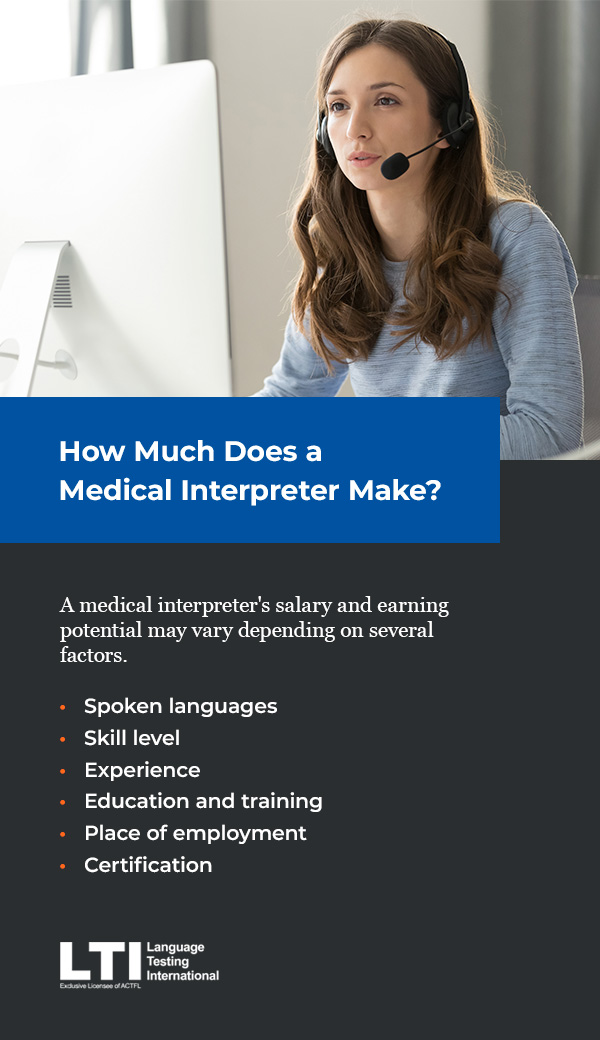
A medical interpreter's salary varies depending on their level of experience, individual credentials, certification, and place of employment. How much a medical interpreter makes will also depend on where they received their training or certification. On average, according to the U.S. Bureau of Labor Statistics, certified interpreters earn around $50,000 per year. A medical interpreter's earnings may also vary depending on several factors.
- Spoken languages: The languages a medical interpreter speaks can also directly affect their salary. Some of the most in-demand languages include Spanish, Chinese, Japanese, French, and German. Proficiency in a less common language may offer a competitive edge.
- Skill level: A medical interpreter's overall talent directly affects how much they can expect to earn. Generally, highly skilled medical interpreters command higher salaries.
- Experience: The longer a medical interpreter works in the industry, the more likely they are to earn a higher wage.
- Education and training: Training from a top-ranked institution or earning highly regarded certifications may yield a higher salary.
- Place of employment: The workplace is also an influential factor in determining how much a medical interpreter gets paid. Typically, larger or more established businesses can pay medical interpreters more.
- Certification: Certifications may provide medical interpreters with a unique edge and may lead to a higher-paying position.
How to Get a Medical Interpreter Certification
The first step to becoming a medical interpreter is to meet the fundamental requirements to enroll in a certification course. While there are many places to earn your certification, you will want to ensure you satisfy your chosen institution's individual requirements. Comparing certification programs can also help you choose the course that fits your unique needs.

What Is a Medical Translator?
A medical translator is in charge of translating medical documents and written content from one language to another. Medical translators must demonstrate a high level of language proficiency to successfully translate documents and ensure no errors. Working in a medical setting is a unique specialty for translators that requires training and education to perform the job duties effectively.
While many people may think the only requirement to become a medical translator is proficiency in another language, becoming a medical translator also requires training, education, practice, and a genuine desire to help others. Additionally, if you are looking to build a career in medical translation, you will need to take language proficiency tests to confirm your skill level in your second language.
Medical Translator Requirements
The requirements to become a medical translator may vary depending on where you are looking to work. In most cases, language proficiency and education are two crucial factors to consider when working toward becoming a medical translator. Potential medical translators must be at least 18 years old to ensure they are mature enough to handle delicate medical information and translate documents effectively.
Language Proficiency
First, you must be bilingual or multilingual to become a medical translator. Command of a second or third language is necessary. Additionally, potential medical translators must demonstrate a consistent ability to read and write in both languages.
Many people may speak a second language conversationally, but medical translators must be highly proficient in reading and writing in their second language. Medical translators work directly with highly technical content that uses terminology the average person may not understand. A medical translator must fully understand detailed written information in one language and translate it without altering the original statement's meaning.
Education
Education and additional training play a substantial role in determining your eligibility to work as a medical translator. The minimum educational requirement for a medical translator is to have graduated high school or received a GED. While a high school education is the baseline prerequisite, some career opportunities will require a bachelor's or master's degree.
Beyond formal education, most medical translators must also complete additional training to become certified in their field. A medical translator test can gauge if a potential candidate is knowledgeable and skilled enough to work in the field. Most of these certifications need regular renewals to ensure translators stay abreast of the latest industry trends.
How to Become a Medical Translator
If you are bilingual or multilingual, you may be eligible to become a medical translator. The first step to becoming a medical translator is to take a language proficiency test to validate your second language skill level. Following this proficiency exam, you can choose to complete a medical translator course and receive your medical translator certification.
1. Language Proficiency Test
Since language users can demonstrate various proficiency levels, a professional language test is the best way to gauge an individual's competence. While many individuals may consider themselves proficient in a language, people often have differing capabilities across the four language skills of speaking, writing, listening, and reading. A professional language test can allow a person to demonstrate their specific skills in a language.
2. Medical Translator Certification
Some medical translators may need the same certification as a medical interpreter, such as those available through CCHI or NBCMI. In some cases, a medical translator may also need a unique certificate, such as one from the American Translators Association. The required validation may affect where you can find work as a medical translator.
How Much Do Medical Translators Make?
A medical translator's salary will vary depending on their skill level, educational background, and what certifications or training they have received. Additionally, the place of employment, experience, and languages spoken will also directly impact a medical translator's salary. According to the Bureau of Labor Statistics, the nationwide average translator's salary was just over $50,000 in 2020.
How to Get a Medical Translator Certification
The first step toward becoming a medical translator is to be bilingual or multilingual, with a comprehensive understanding of the second language. While the ability to carry on a conversation is critical, successful medical translators often have a more complex knowledge of the language and can effectively understand and articulate thoughts in writing in both languages. To receive a medical translator certification, you will want to consider these steps.
- Hone language skills: Even if you are highly proficient in your second language, sharpening your writing skills may prove beneficial when taking a medical translation course or exam. You will want to familiarize yourself with advanced medical terminology and jargon as well as build your grammar and general vocabulary skills. You should comprehend medical terminology in both languages.
- Earn a certification: Choosing an appropriate certification can help you become a medical translator. In some cases, a medical translator may take a medical interpreter course or specialized translator training.
- Pass a medical translator test: The last step to receiving your medical translator certification is to prepare and pass a translator assessment that gauges your ability to understand and translate medical content.

Official Language Certification
Language Testing International delivers ACTFL assessments as remotely proctored solutions to test proficiency in more than 120 languages from your home or office. We are a leading provider of language proficiency testing in over 60 countries. ACTFL's accredited language assessments through LTI are respected, recognized, and accepted across large corporations and institutions. We provide reading, writing, listening, and speaking exams to thoroughly determine an individual's proficiency level.
Schedule your language assessment online today. You may also contact us by emailing customercare@languagetesting.com or calling 800-486-8444.