
Forms of Language Assessment

Measuring language proficiency is a complex process that necessitates the use of valid and reliable language testing tools. Language assessments take various forms depending on the skill or proficiency level being tested. In this post, we'll describe and define different types of language testing so you can better understand the ways you, your students, or your employees can accurately measure their language skills.
What Is Language Testing?
Language testing is a broad category of testing that assesses aspects of a person's ability to understand or communicate in a particular language. It serves various purposes depending on the context. In academic settings, language testing can assess a student's current abilities or progress for the purposes of academic placement. In professional settings, language testing can determine whether a job candidate has the necessary language skills for the position. Whatever the context, language assessments can effectively measure a person's language abilities.
Forms of Language Testing
There are five main types of language assessments: aptitude, diagnostic, placement, achievement, and proficiency tests.
1. Aptitude Tests
Aptitude refers to a person's capacity for learning something. Language aptitude tests assess a person's ability to acquire new language skills. Because of their nature, these tests are more general than other language tests and don't focus on a particular language. Instead, they assess how quickly and effectively a person is able to learn new language skills.
An employer might use an aptitude test to select the best employees to take language courses so they can aid in the setup of a new international branch or provide bilingual customer service.
2. Diagnostic Tests
Diagnostic tests are aimed at diagnosing the state of a person's abilities in a certain area — in this case, their language abilities. In contrast to achievement and proficiency tests, diagnostic tests are typically given at the start of a language learning course or program.
On a diagnostic test, most test-takers encounter questions or tasks that are outside the scope of their abilities and the material they're familiar with. The test results reveal the strengths and weaknesses in one's language abilities. Having a student's diagnostic test results can help teachers formulate lesson plans that fill the gaps in the student's current capabilities. Students can also use diagnostic tests to determine which areas they need to work on in order to reach a higher level of proficiency.
3. Placement Tests
Placement tests share some similarities with diagnostic tests. They're useful for educational purposes and are administered before a course or program of study begins. However, they differ from diagnostic tests in their application. Educators and administrators use placement tests to group language users into classes or study groups according to their ability levels.
A university may give a placement test to determine whether a new French major needs to take introductory French courses or skip over some courses and begin with more advanced classes. Placement tests are also an important type of test in English language teaching at the university level, since international students typically have different English-learning backgrounds and proficiency levels.
4. Achievement Tests
An achievement test evaluates a student's language knowledge to show how their learning has progressed. Unlike aptitude, diagnostic, and placement tests, achievement tests only cover information the student learned from the course material in their studies thus far.
Achievement tests are typically given after a class completes a certain chapter or unit or at the conclusion of the course. A language teacher may give a final test at the end of the semester to see how well a student has retained the information they were taught over the course of the semester. Achievement tests are typically graded and are meant to reflect how well the language tester is performing in their language learning studies.
5. Proficiency Tests
Proficiency refers to a person's competency in using a particular skill, like language, in the case of language proficiency. While other language tests assess language knowledge, proficiency tests focus on the practical application of language in various unrehearsed, real-world settings. They test all four language skills across the three modes of communication — interpersonal, interpretive, and presentational. By doing so, these tests can fully evaluate a candidate's ability to use a language. Anyone can take a language proficiency test, regardless of how they learned the language and where they believe they are in their level of competency.
People possess varying levels of language proficiency, which is why these tests measure language comprehension and production against a rating scale. The most widely used proficiency scales are the ACTFL, ILR, and CEFR scales.
For example, the ACTFL proficiency scale has four levels — Novice, Intermediate, Advanced, and Superior. Each level has low, mid, and high sublevels to further classify a candidate's proficiency level. Novice language users can communicate at a basic level. Advanced language users can speak, read, write, and listen like native language speakers across a broad range of topics and contexts.
The Importance of Language Proficiency Tests
Whereas most types of language tests are primarily associated with academic contexts, proficiency tests are useful in various settings. The primary factors that make them so valuable are their trustworthiness and accuracy. After completing a proficiency test, test-takers receive certification that proves their language proficiency level. Because these tests have well-respected, standard evaluation criteria, they offer an accurate and objective classification of language ability. This standardization ensures consistent results that people and organizations worldwide recognize and trust.
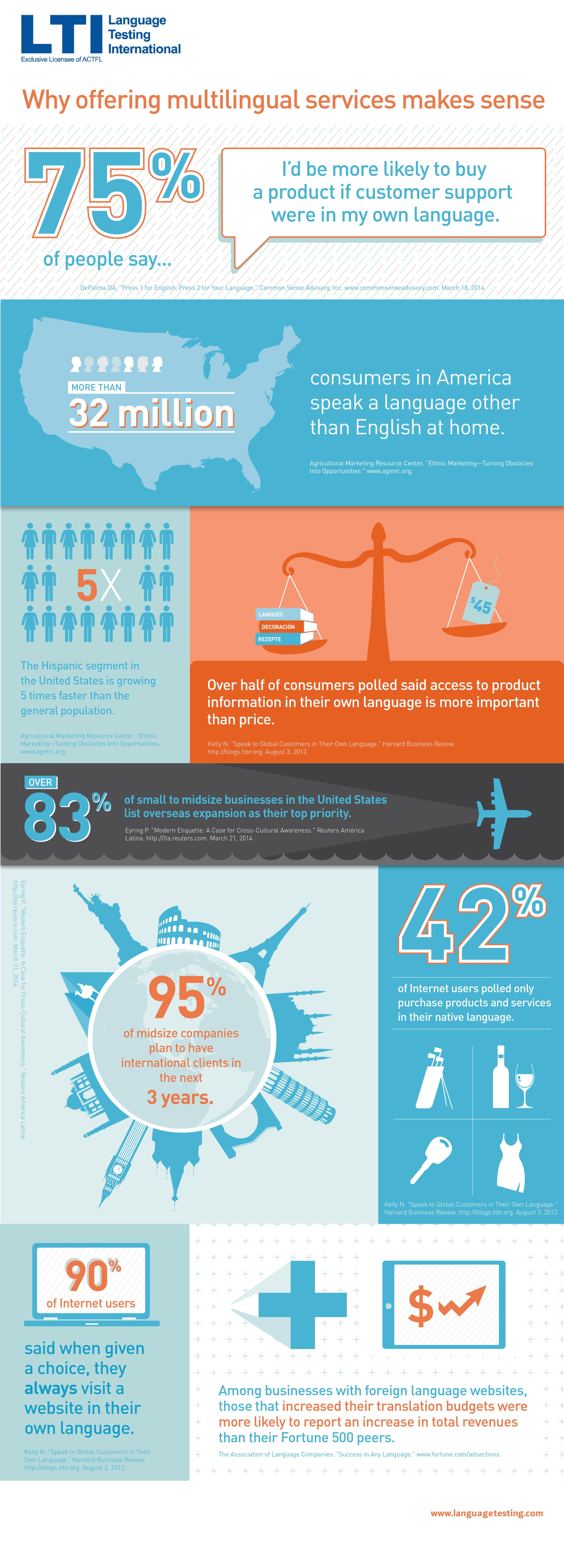
Understanding how well people can perform language-related tasks is particularly critical for organizations that provide services directly to people. These include those in the healthcare, government, finance, and legal industries. Most people in the U.S. speak English, but there are more than 350 languages spoken across the population. For many people, English is not their first language.
To serve a diverse population, employees must be able to communicate effectively in English at a minimum. However, many positions require multilingualism to reduce the barriers to access for essential services. A proficiency test allows job applicants to prove their language skills and helps employers feel confident that they're hiring people who can provide the best care to customers.
Types of Language Skills
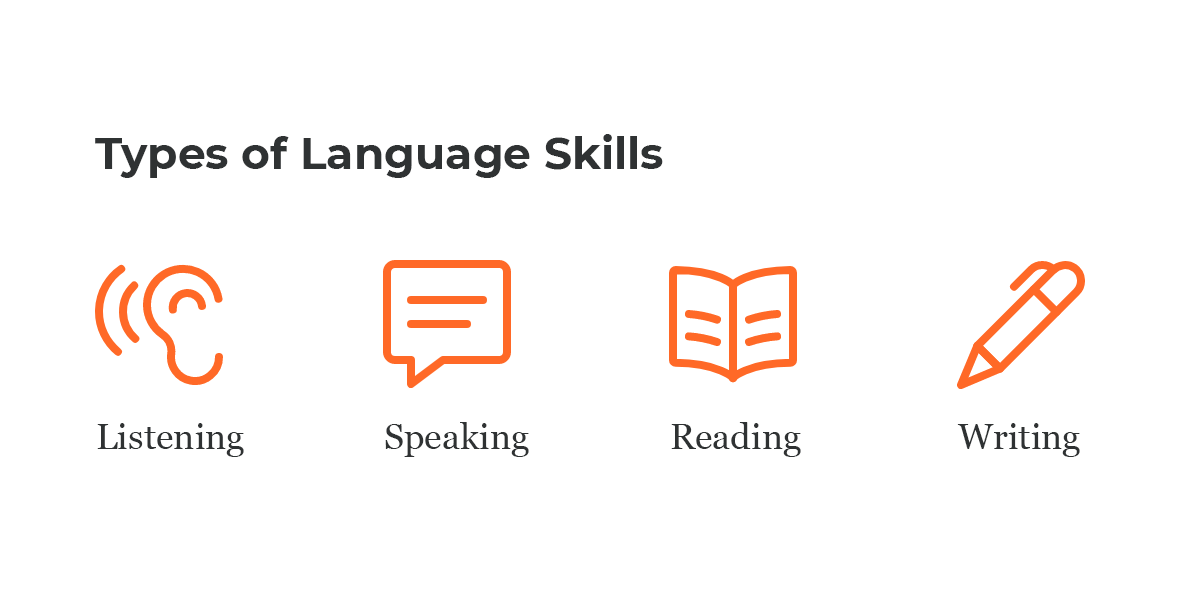
Another way to understand language testing is in terms of language skills. Though people often ask others whether they "know" a certain language, that general term consists of several distinct skills. The four skills involved in language proficiency are listening, speaking, reading, and writing.
These skills can be categorized by their direction and method of communication. Listening and reading are both ways of receiving language input, whereas speaking and writing are both ways of producing language output. These pairs differ from each other when it comes to the direction of communication. The items within each pair, however, differ by their method of communication. Listening and speaking both involve oral communication, while reading and writing involve written communication.
Let's take a closer look at each of the four language skills.
1. Listening
Listening skills in a particular language involve understanding oral communication. When people acquire their first language as babies, listening to their parents and others speaking around them is the initial step toward comprehension and listening ability. Some people also acquire a second language through immersion, where they learn a language by incorporating it into their everyday lives. Listening skills play a pivotal role in immersion learning and typically develop earlier than the others.
2. Speaking
People often refer to speaking a language in a general way that encompasses multiple ways of using a language. For example, they may say they speak a certain language when a more accurate statement would be that they can communicate using all four of the communicative skills. However, speaking is a specific skill necessary to convey information during a conversation. It requires communication in real time and may be one of the most challenging but valuable skills to develop out of the four skills.
3. Reading
Comprehension of oral language and written language are two very different skills. The reading skill involves understanding the meaning of written language. A person may speak a language with a high level of proficiency but struggle to read it. Others may find it easier to read than speak since they can consume and process the language at their own pace.
The degree of difficulty in learning to read in a second language partly depends on how similar or dissimilar the writing system is to that of a person's first language. For example, most European languages use the Latin alphabet, the world's most widely used alphabetic writing system, making letters appear similar on the page. The similarities can make it easier for a native English speaker to learn to read in Spanish, for example. However, a knowledge of the Latin alphabet won't help you understand Arabic script or Chinese characters. Reading tests can help you determine your reading skill level in a chosen language.
4. Writing
Writing has similar challenges to reading, since writing systems vary across languages. Learning to write in a second language that uses a completely different system from a familiar one can be especially challenging. Writing is often more difficult to learn compared to the other skills, as the language user must first learn writing rules. This is as true for learning a first language as it is for a second. Consequently, students often take writing courses in their first language throughout their educational careers in preparation for entering the workforce.
ACTFL Language Proficiency Tests
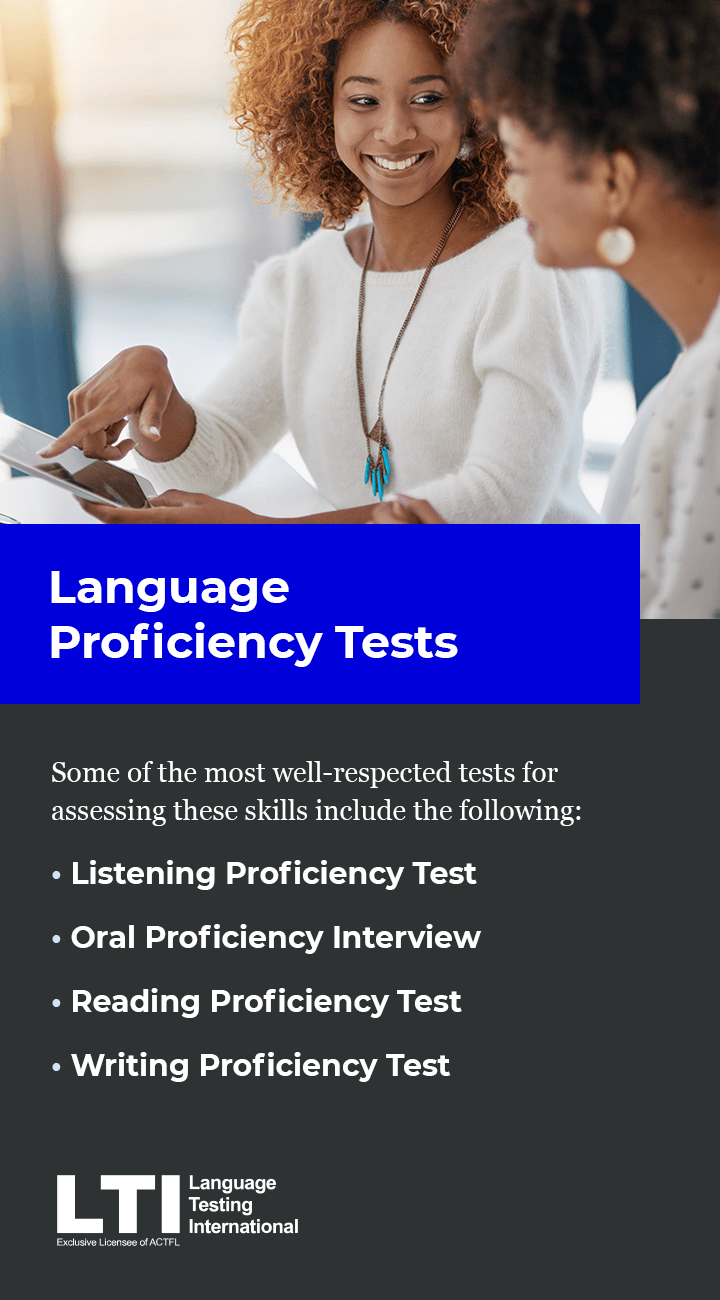
ACTFL’s language proficiency tests are designed to assess a person's abilities in the four skills explained above. Some of the most well-respected tests for assessing the above skills include:
- Listening Proficiency Test: The Listening Proficiency Test (LPT) is an internet-based test that measures a person's ability to spontaneously understand spoken language in one of 11 languages available. The test-taker listens to recordings and must answer multiple-choice questions about what they hear. The results report the test-taker's level of proficiency in listening.
- Oral Proficiency Interview: The Oral Proficiency Interview (OPI) evaluates a person's speaking skills in a particular language. An ACTFL-Certified Tester speaks with the test-taker over the phone and gauges their proficiency level against the criteria outlined in one of the proficiency scales. The interview is a useful assessment tool because, though it follows a structure and protocol, it reflects a real-life conversation.
- Oral Proficiency Interview-computer: The Oral Proficiency Interview-computer (OPIc) evaluates a person's speaking skill in a particular language. The goal of the OPIc is the same as the OPI: to obtain a ratable sample of speech that a rater can evaluate and compare to the criteria outlined in one of the proficiency scales. The OPIc is an internet-delivered assessment that emulates the "live" OPI, but a virtual avatar delivers the questions through a carefully designed program instead of a person. This allows test-takers to complete it on demand and at a time convenient to them.
- Reading Proficiency Test: The Reading Proficiency Test (RPT) is an internet-based test that demonstrates reading comprehension in a chosen language. During the test, candidates read passages in one of 12 languages and answer multiple-choice questions. Because the test is online and machine-scored, results are available immediately upon completion.
- Writing Proficiency Test: The Writing Proficiency Test (WPT) is another internet-based test. Rather than answering multiple-choice questions, the test-taker responds in detail to open-ended writing prompts. ACTFL-Certified Raters assess the candidate's written responses against the guidelines established by one of the proficiency scales. This test is available in a variety of languages.
Through each test, the candidate's results are reported according to one of the following scales to objectively measure proficiency:
- The ACTFL scale
- The Common European Framework of Reference for Languages (CEFR) scale
- The Interagency Language Roundtable (ILR) scale
The Value of Language Testing
Language testing is a valuable tool both in language-learning and professional contexts. Language tests can define where a student is in their current knowledge and reveal the path forward to greater proficiency. Professionals can use language testing to determine whether their skill set meets the criteria of a job or whether they need further training. At the same time, employers can certify their employees’ and new hires’ levels of language proficiency and ensure that they can successfully complete the required tasks without creating risk for the organization.
Language is complex, and assessing it can be a complicated endeavor. Thankfully, experts have created tests that effectively assess a person's language skills. As an instructor, employer, student, or professional, all you have to do is take advantage of these tests to get a useful measure of language proficiency.
Frequently Asked Questions
Language testing can feel overwhelming, but understanding your options helps you prepare and succeed. Here are answers to some of the most common questions about language proficiency testing and assessment.
What Are the Different Types of ACTFL Language Proficiency Tests?
The different types of ACTFL language proficiency tests include the Listening Proficiency Test (LPT), Oral Proficiency Interview (OPI), Oral Proficiency Interview-computer (OPIc), Reading Proficiency Test (RPT), and Writing Proficiency Test (WPT).
- LPT: Measures your ability to understand a spoken language in real time.
- OPI: Evaluate your speaking skills in a live conversation with a certified tester.
- OPIc: Offers a similar speaking assessment but delivers prompts with an avatar in a computer-based format.
- RPT: Checks your ability to understand written language
- WPT: Assesses your skill in expressing ideas in written form.
What Are the 5 Levels of Language Proficiency?
The 5 levels of ACTFL language proficiency are novice, intermediate, advanced, superior, and distinguished.
- Novice: You can communicate with simple phrases or sentences.
- Intermediate: You can complete basic conversations on everyday topics.
- Advanced: You can communicate effectively on a wide range of topics and describe past, present, and future time.
- Superior: You can use the language in nearly any situation, including discussing less familiar topics.
- Distinguished: You can speak the language with complete understanding.
How Do I Choose Between Taking the OPI and the OPIc?
You choose between taking the OPI and OPIc by considering your comfort level and how you interact in a foreign language. The OPI assessment creates a two-way dialogue with another person, while the OPIc assessment prompts you to interact with an avatar. If you thrive on real conversation, choose the OPI. If you prefer a test without live interaction or need more scheduling options, choose the OPIc.
How Should I Prepare for an ACTFL Language Proficiency Test?
You should prepare for an ACTFL language proficiency test by practicing functional communication rather than vocabulary terms. Focus on using the language in daily situations by having conversations, listening to proficient speakers, reading and writing in the language, and engaging in activities that build your ability to communicate naturally and confidently. You can also learn more about the ACTFL tests on their website and even take a demo test to get a feel for the real thing.
Accredited ACTFL Language Assessments From Language Testing International®
Since 1967, ACTFL has been a leader in language proficiency testing. ACTFL assessments are used in over 60 countries and test language ability in more than 120 languages.
Language Testing International (LTI) is the exclusive licensee of ACTFL for the delivery of language assessments. Only ACTFL-certified Testers and Raters score the tests in order to ensure the reliability of test results. Because of LTI and ACTFL's shared reputation for quality testing and accurate results, many government agencies, academic institutions and major corporations recognize the ACTFL certifications obtainable through ACTFL testing as valid credentials for their students and professionals.
To learn more about language testing for yourself, your students, or your job applicants, contact LTI today.