There is a growing need for translation and interpretation services in the workplace. According to a U.S. Census Bureau report in 2022, almost 68 million people speak languages other than English at home. Yet, many still consider it the most useful language worldwide. Professional Spanish translators are indispensable in today’s globalized world. They can handle challenges from cultural nuances to idiomatic expressions.
While many professional translation services exist, more businesses are looking to leverage their existing workforce. An in-house team capable of accurate and efficient translations is a sound business strategy for any company looking to expand further into global markets.
Certify Your Language Skills Today
The Importance of Spanish-to-English Translation
The number of Spanish users will continue to increase. Providing Spanish-to-English translation in corporate settings makes good business sense. More businesses are understanding the benefits of providing content in English and Spanish. Companies need to open themselves up to a broader target audience. Yet English remains a universal language, and providing information in English can drive revenue and support international business opportunities.

Employees certified for Spanish-to-English translations can build your client base, facilitate inter-organizational communication, and foster a culture of collaboration. Companies need to keep up with the upward trend in the use of Spanish and be able to translate various materials into English, including documents, marketing materials, apps, and videos, achieving the broadest reach in a competitive marketplace.
An Overview of Translation Techniques
Translation is the act of converting content from one language to another while maintaining the original meaning, context, and intent. It plays a critical role in various business processes, from maintaining accuracy in legal documents to communicating respectfully in marketing materials. Business translation, therefore, is the translation of business content. For example, sales translation would involve translating business presentations, proposals, and product descriptions on packaging.
Other relevant business translations could include technical translation, which is the translation of user materials, technical specifications, and product documents. In technical translation, it is vital to use appropriate terms for technical concepts and clearly communicate instructions.
In the rapidly growing digital marketplace, website and social media translations are becoming increasingly important. This type of business translation encompasses landing page copy, content marketing information, and e-commerce product listings. As potential customers can access websites worldwide, high-quality website translation is crucial to expanding your business across borders.
Several types of translation exist, including:
Direct Translation
Direct translation aims to transport concepts from one language to another word for word. This technique is ideal for situations where text elements, including grammar and sentence structure, are similar in both languages. In business, direct translation is critical for many tasks, including legal documents and technical specifications. Translators can combine several techniques when attempting a direct translation, including borrowing, calque, and literal translation.
Borrowing is a technique in which translators translate words or expressions directly from the source text into the intended language. Translators often use this technique when there is no target language equivalent, and it can help preserve the cultural context of the original text. For example, English is full of borrowed French words, like deja-vu or cafe.
Calque, also known as loan translation, involves the literal translation of one phrase to another, which often means coining a new term in the target language. For example, the Spanish phrase “sangre azul” is directly translated to “blue blood” in English, a term for nobility.
As the name suggests, literal translation involves translating each word directly. The target text must be idiomatic — containing expressions natural to a native user. It must also retain the same meaning, word order, and style as the original text.
Contextual Translation

Contextual translation involves interpreting the full meaning of a source text and considering relevant background information to reproduce the same meaning in the target language. It’s an essential part of the translation process because if translators translate text word-for-word without considering the context, the result may be inaccurate or unintelligible.
Translating text is more complex than converting individual words from one language to another. For example, the same English word can have multiple meanings depending on the context. The word “bark” can refer to a dog’s bark or the bark of a tree. Translating this word into another language would require some clues as to the context. Two primary types of context exist in translation — linguistic and situational.
Linguistic context refers to the connections between words in a text. Translators must thoroughly understand the language’s structure and grammar to know whether the context makes sense by understanding the text’s surrounding words.
Situational context is broader but as crucial as linguistic context for accurate business translations. When translators focus on situational context, they consider the context surrounding the text, such as cultural factors and political ideologies. Translators must thoroughly understand the culture in which the source text was produced. For example, some tree bark has extreme medical significance among African tribes, which would have several implied meanings.
Translating a text without a solid understanding of linguistic and situational context can lead to misinterpretations or loss of nuanced meanings, both of which are essential for businesses.
Translation Tools and Software
Translation software comprises the tools, features, and resources required to streamline the translation process. Many translation tools exist, often available in desktop and cloud versions. These tools and software solutions aim to improve the speed and quality of translation. They usually have standard features to support and optimize translators as they work.
These tools have limitations that could impact business translations. Human translators better understand cultural nuance and provide additional insight into the intended audience, cultural climate, and marketplace. This flair for contextual translation prevents word-for-word errors.
Your brand voice is a critical business tool, and your marketing department likely spent months or even years crafting the ideal tone. Retaining your brand voice is vital, regardless of your language of communication. Human translators can help maintain a consistent brand message, facilitating a cohesive identity as you enter new markets.
The Benefits of Professional Spanish-to-English Translation

Spanish and English are widely used, which results in an increased demand for translation services. Certified Spanish-to-English translators have an in-depth understanding of both languages, allowing them to create accurate, nuanced, and culturally appropriate business translations. Some of the main benefits of professional Spanish-to-English translations include:
Communication Consistency
Consistent and cohesive communications are essential for businesses. Professional and skilled translators can keep your communications consistent across all languages and platforms. When your clients and customers receive cohesive brand messaging, it strengthens your brand identity and builds trust.
Elevated Customer Experience
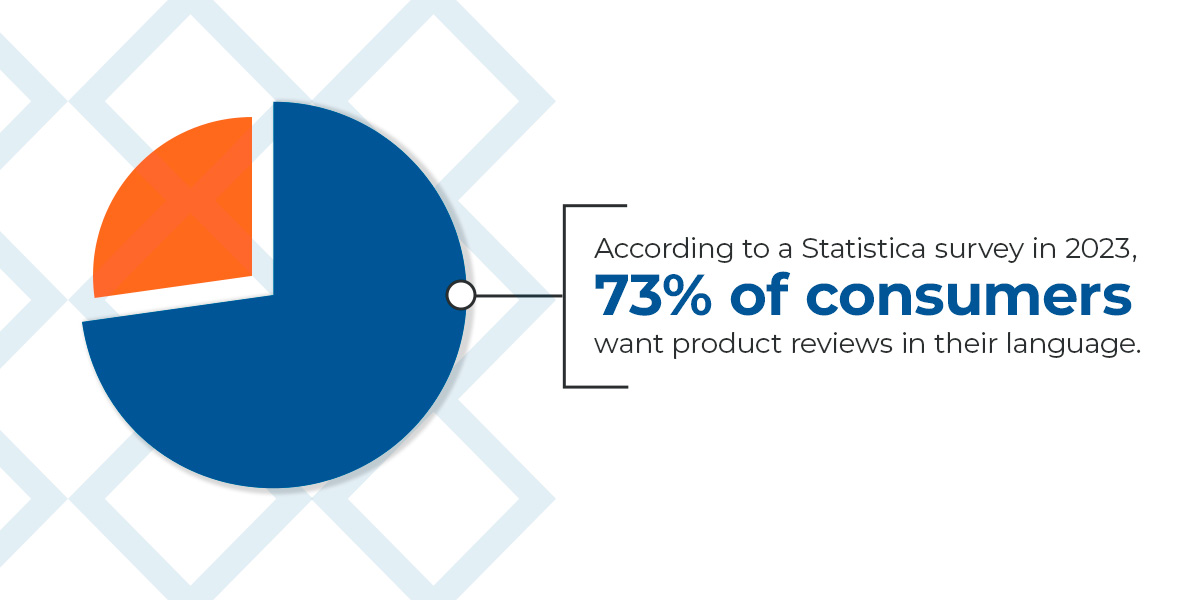
In a global market, high-quality translations are essential to provide a positive and consistent customer experience. A professional Spanish-to-English translator can help your business communicate effectively with customers in both languages. According to a Statistica survey in 2023, 73% of consumers want product reviews in their language. You can expand your business into new and exciting markets with professional translations.
High-Quality, Accurate Content
Whether internal or client-facing, business documents require excellent accuracy and quality to represent your brand and connect with customers. Seasoned, certified translators have the language proficiency and cultural knowledge to produce high-quality translations that accurately capture your unique brand voice. They go beyond translating words and convey the meaning and nuances of the content, keeping the translated content culturally appropriate and relevant to the target market.
Increased Revenue and Profitability
When your team can effectively communicate in Spanish, English, and other languages, you increase the likelihood of making sales, building long-term relationships with clients, and generating revenue. These skilled individuals can also help you avoid costly miscommunications, such as erroneous translations that may offend or confuse your target audience.
Optimized Resources
While you can hire professional translation services, having people in your team with defensible language proficiency and translation credentials can save your business time and money. As they have the necessary language skills to complete these translations in-house, they can streamline the translation process while saving your organization money on outsourcing. In-house translators are familiar with your brand voice and company culture, making them ideally positioned to translate business messages.
Translation Challenges for Businesses
Translation is a complex and multifaceted task. It requires more than linguistic proficiency and also a clear understanding of cultural nuances and context in both Spanish and English. Translators encounter several unique challenges in Spanish-to-English translations, including:
Ambiguities
Ambiguities in Spanish can be challenging, mainly when translating precise text like legal documents or technical manuals. Contextual translation is crucial in these situations, allowing translators to analyze the context and find the best possible interpretation for the translation.
Cultural Nuances and Idiomatic Expressions

The translated text should read naturally and make sense to the target audience. These language-specific expressions and nuances can be challenging to decipher. Spanish and English both have idioms and culturally specific phrases without direct equivalents. Translators must have a strong understanding of both languages to convey the intended meaning of these expressions.
False Cognates
A false cognate is a word that appears similar in both languages but has a different meaning. Translators must pay close attention to detail to avoid misunderstandings or inaccuracies.
Grammar and Structure
Grammatical structures vary considerably between Spanish and English. Spanish is more flexible with word order, while English follows a more distinct structure. These grammatical and structural differences mean translators must work hard to maintain the text’s intended meaning while adhering to the grammatical rules of English.
Inconsistent Terminology
Consistent terminology is critical in business communications, primarily legal and technical translations. Translators can easily use inconsistent terms for the same concept as they are technically correct. However, they may still create confusion. Many translators have a glossary of terms to help them adhere to consistent terminology.
Cultural Adaptation and Localization
In translation, the words are only part of the message. Accurate translation goes deeper, considering the target audience’s cultural norms, context, and preferences. Adapting cultural references and idiomatic expressions creates a localized, culturally appropriate translation that resonates with the intended audience.
Vocabulary Differences
Spanish and English have distinct vocabulary sets, making finding the right words or phrases challenging. Both languages have words with similar meanings, but they vary in usage and connotations. Translators must understand both languages well to choose the words that best capture the intended voice and meaning.
Overcoming Translation Challenges
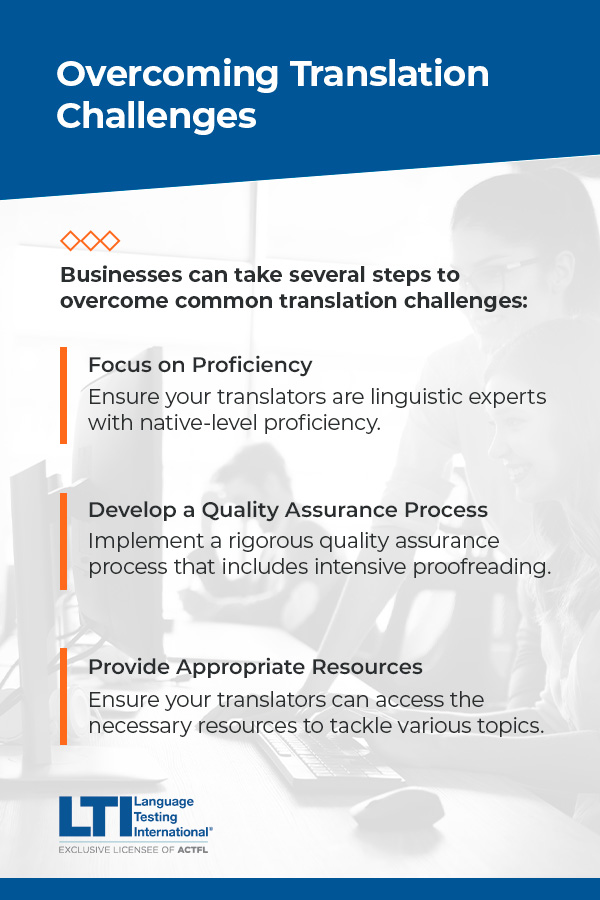
Businesses can take several steps to overcome common translation challenges with their in-house teams, including:
Focus on Proficiency
Ensure your translators are linguistic experts with native-level proficiency in English and Spanish. They should also have expertise in the subject matter to understand the text’s nuances fully.
Develop a Quality Assurance Process
Even the most skilled and experienced translators can overlook things. Implement a rigorous quality assurance process that includes intensive proofreading to catch errors. You can also establish standards and procedures to maintain consistency in tone, brand voice, and messaging. Gather feedback from your clients wherever possible and provide your translators with any revisions to adopt a culture of continuous improvement.
Provide Appropriate Resources
Ensure your translators can access the necessary resources to tackle various topics and terminology. These resources may include reference texts, dictionaries, and industry-specific materials. Build a comprehensive reference library with specialized resources for your business and ensure you always have the most recent materials available.
Language Proficiency Explained
Language proficiency is the ability to use a language to perform an action or function, regardless of how they acquired the skills. Someone’s proficiency level reflects their ability to perform essential language functions, like reading, writing, listening, and speaking. Highly proficient language users can use world languages accurately and contextually in various professional applications. Spanish-to-English translators must be highly proficient in both languages to complete accurate and reliable translations.
Proficient language users can leverage their skills in unrehearsed, real-world situations. These skills often make them excel as translators, as they understand their languages’ nuances and cultural contexts.
Levels of Proficiency
A language proficiency scale measures a language user’s ability to use a language in real-world applications. Many businesses have their teams take language proficiency tests to establish their level of proficiency. Language proficiency scales accurately indicate how a language user performs various tasks.
Proficiency indicates how well a person performs in listening, speaking, presenting, writing, and interpretation. Each scale measures linguistic abilities on different levels to measure a person’s ability to use a specific language. Various proficiency scales exist to give individuals a defensible score. Here are three common scales:

The ACTFL Proficiency Scale
This scale comprises four proficiency levels — Novice, Intermediate, Advanced, and Superior. The first three levels are divided into Low, Mid, and High. Proficiency levels under ACTFL guidelines are presented in ranges, describing what a person can do with a language.
CEFR Proficiency Scale
The Common European Framework Reference for Languages (CEFR) scale measures language skills in six levels — A1, A2, B2, B2, C1, and C2. C1 and C2 represent proficient language users, while A1 and A2 represent novice users. Translators should have a C2-level rating on the CEFR proficiency scale, indicating they can communicate capably and appropriately about various topics. They can also communicate about demanding or academic material.
ILR Proficiency Scale
The United States Inter-Agency Language Roundtable (ILR) scale measures language skills and abilities with six levels from zero to five. Level zero indicates no proficiency, while level five denotes native or bilingual proficiency — ideal for translators.
Certification for Translators and Interpreters
Translation certifications are credentials that demonstrate expertise. They help professionals validate their competencies and demonstrate their skills to current or potential employers. Translators can apply for several professional translation certifications, including an American Translator’s Association (ATA) certification, United Nations Translation Accreditation, and career-specific options like health care or legal certifications. These credentials differ from interpreter certification, which centers around the spoken word.
Language proficiency test results are also essential tools for translators. These tests help businesses ensure they hire the most qualified and effective translators. Translators’ most crucial language skills include reading and writing in specific languages. They should also be able to listen and speak in that language. Language proficiency tests establish proficiency levels in reading, writing, speaking, and listening.
Translators should have various skills, including proficiency in two or more languages, effective communication, and a clear understanding of idioms and cultural differences.
Cultural Nuances in Spanish-to-English Translation
In today’s interconnected world, businesses know the opportunities available through understanding different cultures and communicating in world languages. For best results, companies must be able to translate and localize their content. Localization involves adapting content to the relevant cultural and regional context. The localization process addresses cultural nuances, allowing translators to make content more natural and appropriate to the target audience.

Blending translation and localization is essential for businesses to reach diverse audiences without sacrificing brand voice or interfering with the core message.
Understanding Cultural Context
Cultural sensitivity is essential for effective business translation. One aspect of cultural sensitivity is understanding the colloquialisms and idioms of a particular language. Cultural context is another crucial aspect of cultural sensitivity. Translators must understand the context in which their message is conveyed. For example, some cultures value tact, while others value honesty.
Translators must also understand different cultures’ customs, beliefs, and values, which can significantly affect translated communications and how you do business. Consider these differences to avoid awkwardness and potentially costly errors. While neglecting or misunderstanding cultural context can seem like a minor error, it affects your ability to build trust with various stakeholders.
Adapting Translations for Different Audiences
Text adaptation is a form of customization, tailoring translations to suit different audiences within your target demographic. Translation from Spanish to English means adapting the text language and style. Instead of simply translating the words, translators must adapt them to specific English target groups with different habits, social structures, and business expectations.
Adapting messages is especially important for marketing and advertising. Wordplay in Spanish is likely an effective marketing tool, but it loses its wittiness if translated directly into English. Skilled translators will find the best way to adapt the message while maintaining the underlying cultural references.
Learn More About Language Testing International® and Our Role in Establishing Language Proficiency
Effective Spanish-to-English translation can transform your business, breaking geographical boundaries and allowing you to enter new markets. When hiring new team members or leveraging your existing employees’ skills, LTI will help you eliminate the guesswork, leaving you confident you’ve chosen the perfect candidate.
We have been a leader in language proficiency testing since 1992, providing ACTFL proficiency testing in over 120 languages across 60 countries. We are the exclusive licensee of ACTFL language assessments, which are recognized by global businesses, government agencies, and academic institutions. We administer language assessments to hundreds of thousands of candidates annually. Even if you want translation in Italian, French, and Spanish, we can help you find and certify the ideal candidates. Reach out to us and learn more today!