An increasing amount of industries and businesses throughout the United States are looking to hire bilingual individuals. Bilingual professionals can communicate in two languages, allowing them to serve customers who speak various languages. They may also have more empathy and a broader cultural perspective, which is essential in the wake of a growing, diverse population.
The need for bilingualism rises significantly for local government organizations that serve a multicultural community. Read on to discover why a bilingual workforce is so critical in modern local governments.
1. Enhancing Communication
Local government workers — from teachers, doctors, and social workers to police officers, city planners, and firefighters — rely on communication skills to perform their duties. When service providers speak the same language as their clients, they can better understand and meet their needs. Understanding clients is even more critical in emergencies, where clear communication can be the difference between life and death.
According to a 2022 American Community Survey, more than three-quarters of Americans speak English. However, many people speak another language at home and have limited English proficiency (LEP). Local governments must hire bilingual and multilingual employees to improve communication with people who speak minority languages.
2. Promoting Equality
Bilingual workers are also necessary to ensure every community member has equal access to government resources, regardless of their language. When government workers can’t provide their services in every language residents speak, a language barrier forms for that portion of the community. Language barriers make it hard for non-native speakers to receive critical services like protection, education, and health care. This form of discrimination can make people feel powerless and isolated.
The government must make resources comprehensible and accessible to all. Prioritizing bilingualism in local government can help workers meet expectations, reduce language barriers, and increase equality in their communities.
3. Complying With Laws
The U.S. has multiple language access laws to protect people’s civil rights and reduce language discrimination. One such law is Title VI of the Civil Rights Act of 1964, which prohibits discrimination based on national origin in programs that receive federal financial assistance. The law considers language in its interpretation of national origin.
Executive Order 13166 is another law related to language access. This order requires government agencies to develop and implement plans that improve service access for people with LEP. To comply with these laws, government organizations can offer interpretation services, which are made possible by bilingual employees. They must also provide government services, information, and programs in multiple languages.
4. Building Community Trust
Establishing trust is key to creating thriving communities where people feel positively about their local government. Individuals who trust their local government are more likely to comply with laws, participate in governance initiatives, and support government decisions.
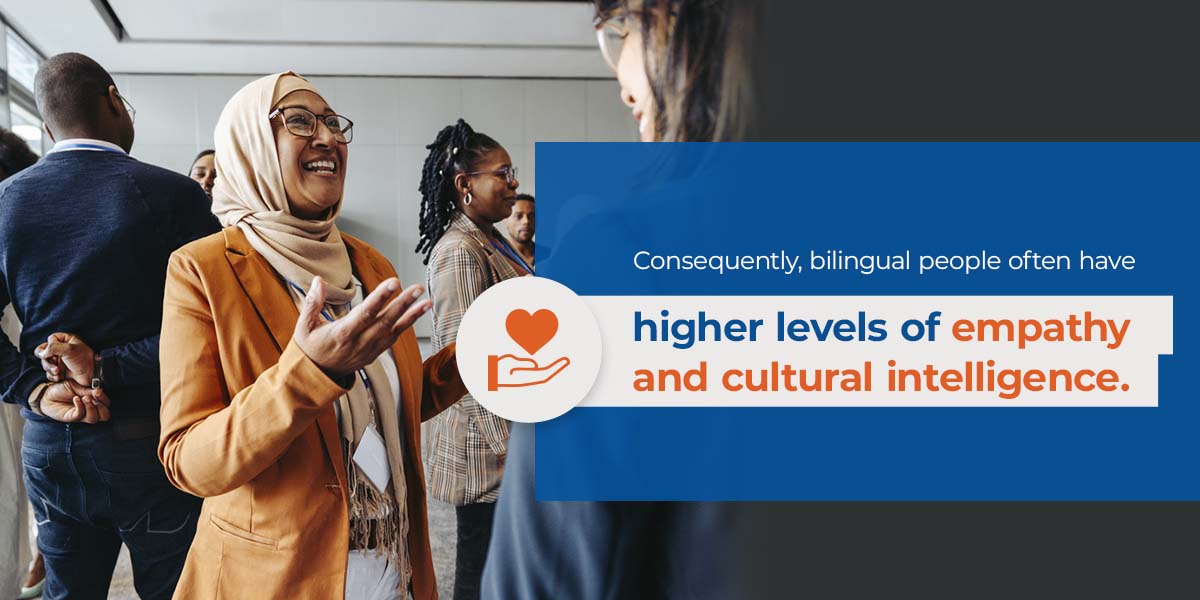
Language is a critical tool for building trust with others — it is challenging to trust someone when you don’t understand what they’re saying. Consequently, community members may struggle to trust government workers who speak a different language. A bilingual employee who can speak various languages can connect with residents better, allowing them to build trust and strengthen relationships.
5. Improving Service Efficiency
Bilingualism can also help local government agencies increase productivity and efficiency. When service providers speak the same language as their clients, they can communicate directly and rely less on assistance from intermediaries or language translation tools. This can speed up and streamline processes and improve the client experience.
Effective communication also reduces the chance of misunderstandings. A misunderstanding can cause information to be conveyed inaccurately, resulting in confusion and errors that impact service delivery. Miscommunication can also escalate to conflict, which causes mistrust, dissatisfaction, and delays.
6. Creating Informed Policies
A bilingual workforce is imperative for developing inclusive and relevant government policies. Government organizations that hire bilingual employees can receive feedback directly from community members, even those with LEP, which ensures everyone’s voices are heard and considered in policy-making.
A bilingual employee’s ability to communicate effectively in two languages also helps them gather more accurate, useful information. Additionally, they bring their understanding of various cultures and perspectives to the table. These advantages help policy-makers understand the community’s needs and concerns and make more informed decisions.
7. Boosting Bilingual Enthusiasm
While the demand for bilingualism is rising in the country, the language skill shortage makes it difficult to fill essential roles. Promoting the importance of bilingualism and increasing language education can solve this challenge. However, some individuals may only learn a new language if there is some incentive involved or if they feel it is advantageous to their career.
Many government agencies have responded by creating more bilingual government jobs and offering higher wages for them. These roles can encourage people to develop their language skills to meet role requirements. Increasing bilingualism across the government workforce can also raise awareness about the need for language diversity and inspire people to learn a second language.
The Benefits of Bilingualism for Government Employees
Bilingualism has various advantages for government agencies and the communities they serve. However, speaking a second language also benefits individuals currently working in a government role. Language learning engages various cognitive abilities, including memory, problem-solving, and attention. Improvements in these areas can make demanding tasks easier and improve performance.
Organizations that value bilingualism may offer promotions to individuals who learn new language skills, opening up new opportunities for advancement. Due to the demand for bilingual workers, learning a second language can give aspiring government workers a competitive advantage in the job market. Additionally, some research shows that being bilingual can even raise your salary.
Certify Bilingualism With Language Testing International®

Using language proficiency tests during hiring can confirm bilingual candidates’ language skills. Language Testing International (LTI) has helped federal, state, and local government organizations test language proficiency since 1998. We’re the exclusive licensee of ACTFL assessments, which offer a reliable and objective method for measuring language ability, regardless of how it was acquired.
We deliver tests in over 120 languages for individuals and organizations. If you run a government agency, contact us today to learn more about our organizational language services. We work with clients such as the U.S. Department of Defense and the New York City Department of Education. Bilingual individuals can browse our available tests online to receive certification.