Why a virtual exchange?
Have you ever considered engaging in a virtual exchange with a classroom across the world? After trying time-consuming pen pal exchanges, I wanted to find a way to connect my middle school language learners with their peers abroad to engage in authentic conversations in the target language. My hope was to expose them to the world and how language is used by students just like them, and to build motivation by providing a relevant, meaningful experience.
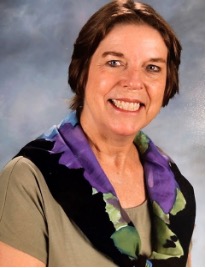
I am a mid-career teacher, having taught French and Spanish for the past 20 years in a public school district in the suburbs of Westchester County, 33 miles north of New York City. For the past five years, I have taught French in grades 6-9. Frankly, I love being my learners’ first language experience and sharing my passion for travel and the breadth of the francophone world and its cultures.
In the fall of 2023, I was offered the opportunity to expose my students to another country, culture and language through LTI’s Level Up Village (LUV). Over the course of several months, my 8th grade French students were able to communicate with fellow students from Dakar, Senegal.
How does an asynchronous video exchange work?
To begin, my students prepared and filmed themselves talking about the topic of food, an appropriate and appealing novice level topic. They introduced themselves in English to their Senegalese counterparts, and talked about their families, school, and town in short one-to-two minute videos. After I watched and approved the videos, they were submitted within the secure LUV digital platform to the students in our partner class in Senegal. The process was simple, and our technology director marveled at the security of the platform.
At the same time, the students in Senegal prepared their own introductory videos, speaking of their families, school, and city. After they were approved by the partner teacher in Senegal, my students were able to watch all the videos from the Senegalese students. As each class of students viewed one another’s videos, they then had the opportunity to film their reactions and share comments and comparisons. One of my students commented, “It was very interesting to speak with real people in other parts of the world in different languages.” This is the kind of engagement that motivates students to learn more.
After the introductory task, students tackled the next task in French, which focused on food items in their family pantries, where their family shopped, and foods typical of their cultures. Students shared their favorite foods and products they buy at the grocery store. In class we explored the similarities and differences between our cultures. For example, my students noticed that fish, oil, and rice are staples of Senegalese cuisine, while meats, poultry, pasta, and potatoes are more prevalent in our culture.
The final two tasks involved holidays and recipes. Unfortunately, we did not get to finish the last section, but a few of my students were so excited that they produced their own videos for all the tasks!
Balance the benefits
As you consider connecting your learners with their peers abroad through synchronous video exchange, pen pal letters, or a LUV asynchronous video exchange, consider the benefits of your efforts. For me, LUV was simple as I did not have to find my own partner. Because the digital platform is certified by PRIVO as COPPA-compliant, I was assured that my learners’ student data and privacy were secure. And the curriculum was ready-made! It aligned with my district curriculum, and was expressed in can-do statements, offering clear and concise learning targets.
The benefits did not extend only to me as the teacher, but most importantly, to my learners. First, the LUV exchange engaged students; each student was responsible for writing and filming their segment. They were open and honest in their observations, and polite in their comments. One student commented: “This does put a lot of pressure on the students but is a good chance to practice French with someone that has a different accent and way of speaking.”
My class appreciated seeing how other students live, eat and prepare food. While we watched videos together, students marveled at different aspects of their counterparts in Senegal, such as the foods, their homes, and their family lives. One student noticed that: “You get to hear people who speak French as their first language and you get to learn about their culture while working on you French, it is beneficial for both sides.” Of course there was student accountability involved, as noted by one student: “I believe if everyone handed in the video and does the work, it is cool to see other students learning language and culture.”
From my perspective, the most important aspect of this program is the exposure to a totally different culture and lifestyle. Our students were able to see what a typical high school student in Senegal experiences. They live at home and often cook for their families. It was a true learning experience for our middle school students, many of whom have not traveled outside the United States.
Not everything is perfect
One disadvantage was the production time and response from our Senegalese students. My partner teacher taught 50 students in one class and was particular about which students would participate in the program with our 30 students. What our students take for granted (small class sizes, stable Wi-Fi connections and technology access) was extremely challenging for our Senegalese counterparts, due to large class sizes, limited access to devices and unstable internet connections. Because of these difficulties, a few months later the program ended.
Of course there were students who felt pressured, disengaged and not interested if it was not a graded project. Personally, however, I was encouraged. Some favorite takeaways are: one student from Senegal shared his passion about boxing and spoke of his favorite boxer. One of my students commented in return and shared his love of boxing and his favorite boxer. It was a conversation that could not have happened without LUV. Another student who struggled in class excelled in video production and made a fantastic video of her shopping experience, adding products into her cart and labeling them in French as she went along. She was proud of her video and the comments and responses from her Senegalese counterparts.
Overall, a positive experience!
To learn more from my students, I created a survey to collect comments and input. This led me to conclude that in the end, our LUV Languages & Cultures exchange with Senegal was a satisfying experience for my students in New York. Some observations included: “I think it is a good idea to connect with people around the world because then people meet and learn more about countries that speak the language they are learning.” And: “This is an opportunity to have an immersive language experience with real people interacting on the other end. I think this program will push the language study in our schools.”
While we often question the use of technology, it is a real advantage to use it in a culturally appropriate way in the world language classroom. I recommend Level Up Village to teachers to help connect their students to another culture. We have more in commonalities than differences, and it is encouraging and enlightening to help our students discover this.
I am so grateful for the opportunity to introduce my students to another French-speaking country and culture. Personally, I learned a lot and was delighted to correspond with my Senegalese counterpart, whom I admired and respected. I definitely look forward to pursuing another exchange with my 8th grade students in the future.
To learn more about Level Up Village for your learners, contact sales@languagetesting.com.