Language Proficient
Brought to you by Language Testing International — Your Global Partner in Language Testing, Training, and Learning.
3 MILLION Multilinguals strong and growing!

Companies all around the world depend on multilingual talent in order to grow and scale their business. Employees with the appropriate level of language proficiency eliminate communication barriers and mitigate risk when conducting business. The list of companies that have announced hiring initiatives to fill the gap in their multilingual talent pool is growing—from call centers in Honduras to corporations in the United States such as Progressive, Nielsen, and Disney. CEO and Founder of Monese, Norris Koppel, spoke on his purpose, “We operate in 8 languages with more to roll out, so having the insight of those who are bilingual or multilingual not only helps us to achieve our goals but also to understand the nuances and cultures of each country and our customers.” (Gentle)
The impact of having a multilingual proficient workplace in the corporate sector bolsters both economic and social psychological effects. A one language fits all approach to business “could impoverish innovation and creativity, leading to business monoculture and standardized patterns of thinking” while a multilingual approach allows a company the opportunity to look at achieving their goals through multiple lenses (Yanaprasart, 2016, HRPub). Implementing a multilingual approach provides a strong infrastructure for engagement, for suppliers to customers to coworkers, with which otherwise nuances in language would be lost (Kraniotis).
The consequences of continuing on with this one language fits all approach have become indisputable. In the UK, 11% of contracts are lost annually “…because SME’s are unable to conduct business in a language other than English. That’s the equivalent of 945,000 lost contracts”(DCU Language Services, 2013). Overall in the United States, 1 in 6 U.S. businesses are losing out due to a lack of language skills and cultural awareness in their workforce. In Australia, a high profile case, in particular regarding 7-Eleven, the convenience store chain, was ordered to pay $57 million in wages to overseas workers who were unable to communicate workplace issues because of a language barrier (Bushell-Embling). Clearly, language proficiency is a worldwide matter.
As the role of technology evolves, it is important to embrace the highly adaptive means of evaluating language proficiency in the workplace (Kraniotis).
Language Testing International (LTI) administers language assessments to hundreds of thousands of candidates every year and is one of the largest and most respected foreign language proficiency test providers in the world. We offer the highest level of client service as well as convenient online test scheduling and reporting over secure client networks. Not sure what level of language is needed for the task at hand? LTI offers comprehensive assessments to help you every step of the way!
 Globalization creates unlimited opportunities for industries worldwide. How can your organization go global and ensure that your efforts are successful? Your company’s potential customer base is virtually endless when barriers are broken down, including, but not limited to, language barriers.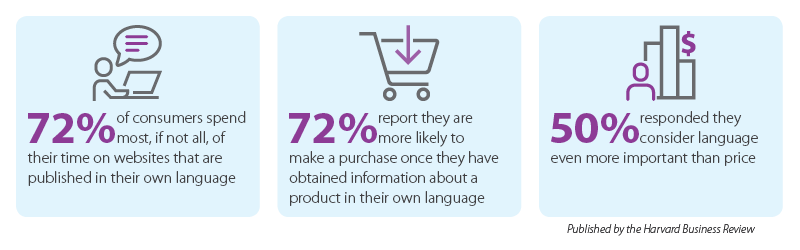
 Why Language Proficiency Assessments Are Good for Employees and Employers
 t’s always an exciting time right before Thanksgiving…not because of time off, yummy food, and time with family and friends (while those are exciting) but because it means that the Annual
  American medical systems face challenges as demographic shifts result in a growing number of patients with Limited English Proficiency (LEP). The commonality of language and cultural sensitivity are key elements that can facilitate the implementation of diagnosis, prognosis, and treatment. It is vital that healthcare providers offer translation services in order to respond to patients’ concerns and needs most effectively.