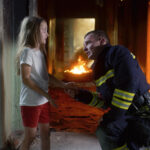
When there is no time to lose in an emergency, clear communication can mean the difference between life and death. As frontline responders, 9-1-1 operators hold a pivotal responsibility in coordinating emergency services and aiding callers in distress. For operators who are proficient in two or more languages, bilingualism is not merely a skill—it’s a superpower capable of saving lives and ensuring prompt and effective responses to emergencies. “When you dial 9-1-1, every second counts. Be prepared to give your address, the nature of your emergency and—your language to the 9-1-1 dispatchers. If you don’t speak English, be ready to wait,” (Salzbrenner).
Certify Your Language Skills Today
Leverage Your Bilingual Skills in Urgent Situations
Consider a scenario where a non-English-speaking caller reports a medical emergency to a 9-1-1 operator. The setting is the bustling city of New Orleans, where the 9-1-1 emergency call center is teeming with activity. A bilingual operator named María, fluent in both English and Spanish, answers a call. To her surprise, she heard an urgent whisper in Spanish. “¡Ayuda! ¡Necesito ayuda!”, the caller begs for help. The caller, unable to speak English, continues to describe the emergency in rapid Spanish. It was a car accident, and they need immediate assistance. Leveraging her bilingual skills, María gathers crucial information about the location and severity of the accident. Simultaneously, she alerts the dispatch team in English, accurately conveying the details to ensure a swift response. María’s help does not end there; she stays on the line, offering comfort and reassurance to the caller until help arrives. “Someone who doesn’t speak English may hear hold music while the dispatcher searches for an interpreter. This causes delays in getting help quickly, especially if the dispatcher is unable to correctly identify the language or dialect,” (Carmody).
In the absence of language proficiency, there is a risk of crucial information being lost in translation, delaying the dispatch of emergency services, and potentially worsening the situation. However, as a bilingual 9-1-1 operator, you can seize control of the situation, bridging the language gap, comforting the caller, and gathering essential details to guide responders.
Certify Your Language Skills Today
A survey conducted for ACTFL, “Making Languages Our Business: Addressing Foreign Language Demand Among U.S. Employers,” highlights the importance of language proficiency in public service roles. It reports on the positive impact that ensuring language proficiency has when engaging with diverse individuals in the community, including how employers are able to meet their customers’ needs and how employees are better equipped to navigate a global economy. By investing in training and language testing for 9-1-1 operators, emergency call centers can enhance responsiveness, minimize miscommunication, and fulfill their mission of saving lives. Language Testing International® (LTI), the exclusive licensee of ACTFL, delivers ACTFL language proficiency evaluations of the linguistic skills of bilingual or multilingual professionals. From Spanish to Mandarin to Arabic and beyond, assessments from LTI validate an individual’s language skills, empowering employees to excel in critical roles.
Empower yourself with an ACTFL language proficiency assessment today! Whether you’re a 9-1-1 operator, firefighter, EMT, or public housing administrator, ACTFL-certified assessments provide the validation you need to effectively serve diverse communities and present yourself as an asset to your employer. Take advantage of remote proctoring, which you can do anytime and anywhere, and get started on your language proficiency journey now.
Sources
American Council on the Teaching of Foreign Languages (ACTFL) and the Lead with Languages Campaign commissioned Ipsos Public Affairs, with the support of Pearson LLC and Language Testing International. (2019). “Making Languages Our Business: Addressing Foreign Language Demand Among U.S. Employers.” https://www.actfl.org/uploads/files/general/MakingLanguagesOurBusiness_FullReport.pdf
Carmody, Morgan. “Answering The Call For Help In All Languages.” Joint National Committee For Languages. Dec.10, 2019 https://www.languagepolicy.org/post/answering-the-call-for-help-in-all-languages
Salzbrenner, Trace. “What happens when 911 doesn’t speak your language.“ The Beacon. September 13, 2023. https://wichitabeacon.org/stories/2023/09/13/language-interpretation-911/