Generation Z Students in the Language Classroom

Today’s classrooms are full of students from a cohort referred to as Generation Z or Gen Z. Understanding the characteristics of students can be an important tool for an effective teacher. The good news for language teachers is that there are several ways to capitalize on Gen Z characteristics to prompt growth in your language program and increase engagement in the classroom.

Make Language Learning Future-Relevant

The generation of students today have grown up in a culture of housing crisis, debt, and terrorism. They value truth and practicality, do not want their time wasted, and want to feel there is a practical purpose to what they are learning. To capitalize on these feelings, you can educate students on the real benefits of language learning for  today’s workforce (see the Lead with Languages report for statistics on the subject). Connect a solid line from learning a language to potential job opportunities and future earnings. Discuss language learning as an investment. Use the NCSSFL-ACTFL Can-Do Statements as practical guidelines for everything that is done in the classroom. If every activity is tied to a language skill that the students should be able to do, it creates a root of realism that students will respect.

The Seal of Biliteracy is another tool you can use to promote language learning to Gen Z students. With 49 states (and the District of Columbia) having adopted the Seal of Biliteracy, chances are you can incorporate it into your language program. Explain to your students the different ways this recognition could be used to procure advanced placement or opportunities in the workforce. Let them know they can potentially get college credit for their language skills (see ACE credit recommendations for ACTFL assessments). If you know institutions in your area that offer college credit specifically for the Seal of Biliteracy, use that as a promotional tool! If students feel that obtaining the Seal can save them money or open them up for scholarships, you just might see your program numbers grow.

Incorporate Language and Other Disciplines

Another way to capitalize on Gen Z’s need for practicality is to do cross-disciplinary lessons, which incorporates the Connections Standard in the World-Readiness Standards for Learning Languages.  Show your students the ways that language and culture are used in other content areas. Also remember that your students value authenticity, so find authentic materials and resources whenever possible. This includes your students’ favorite material from social media sites like Instagram and TikTok. Encourage your students to follow different authentic language accounts to boost their exposure to the language. For example, one of my students followed a fan account for her favorite band that was in Spanish. It boosted her fan credibility and her language skills. Gen Z students are connected, so referencing relevant events and trends can be beneficial for student engagement.

You can also select textbook, course materials, student learning activities, and assessments which feature authentic materials. For instance, ACTFL carefully develops content in the AAPPL test to ensure it is as authentic as possible, age-appropriate, and couched in real-life.

Empower Students and Personalize Learning where Possible

A major challenge for educators is the desire to give Gen Z students individualized and personalized learning experiences. It’s hard for a teacher to provide 120 individualized learning pathways to 120 different students each day. The good news is that Gen Z works well when self-directed and values co-planning. Look for opportunities in your lessons to create more self-paced or self-directed learning that allows for different kinds of pacing and choice.

For example, AAPPL score reports provide rich details and strategies that can help students take ownership of their ongoing language development. If you provide a framework for students, and they can learn in a way that they have ownership, they will value the learning experience. Ask students to set their own language goal(s). Provide ways for them to meet the goal(s). If you are using the ACTFL Proficiency Guidelines – 2024 or the ACTFL Performance Descriptors which provide a framework for interpreting AAPPL scores, these can be good resources for your students to build an individualized pathway toward proficiency. Your Gen Z students might value ongoing portfolios that help them demonstrate their growth and learning in a more individualized way. Have discussions with students where they need to individually reflect on their progress and weaknesses.

Gen Z students are in our classrooms to prepare for life in a world where skills like collaboration, willingness, independence, and accountability need to be exercised. These are also skills that any employer values in its workers. Language classrooms are wonderful places to build and practice these skills. The act of learning a language requires collaborative interpersonal skills and collaboration and tests a student’s willingness to make mistakes and learn from them. Our job as educators is to help equip our Gen Z students with skills they can apply in their future endeavors. As language educators specifically, we can adapt our resources, assessments, and teaching strategies to empower our Gen Z students to develop proficiency in more than just language.

Watch –> What Is the AAPPL?

Meet a Language Superhero: Jeff Page

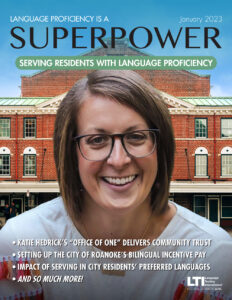
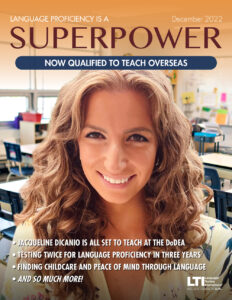
magazine cover: language is your superpower In this month’s “Language Proficiency Is Your Superpower” feature, we spotlight Jeff Page, a bilingual professional, a K12 paraprofessional, English-Spanish interpreter, and a tennis coach. Jeff recognizes the power of multilingualism and dedicates himself to supporting multilingual students and their parents in his school district. Jeff also also produces an audiobook narration podcast called “English and Spanish Literature” where he narrates in English and in Spanish, as well as Ecclesiastical Latin, and Esperanto.

Read Jeff’s full story here: Language-Superpower-Magazine-Jeff-Page

Do Not Leave Your Success to Chance

Are you frustrated with your job search? Wondering how to be competitive in today’s globalized economy? Increasing your chances of getting hired? If you command more than one language, you might want to consider getting assessed and certified for your language proficiency before you continue your search.

In today’s multicultural marketplace, there are growing needs for bilingual and multilingual personnel in the United States. More employers in various industries are acknowledging the importance of recruiting candidates who can communicate in a clear and effective manner in a language other than English.

“Being multilingual in any professional capacity can be a valuable skill. Even if the job description does not request knowledge of another language, you could benefit from listing it in a skills section of your resume, along with your determined proficiency level. If you foresee that your language skill could be a unique addition to the job, you could also mention it in your cover letter,” suggests the Indeed Editorial Team.

Read more –> Why It Pays to Be Bilingual

A 2018 survey released by ACTFL unveiled that the demand for language skills in the workplace across the nation will continue to rise. Proficiency in other languages is essential in building relationships with clients and customers inside and outside the United States. It is becoming vital for companies to address any language voids they are experiencing to meet the demands of diverse domestic consumers and new business opportunities abroad.  The report also states that Spanish, Chinese, and French, are the top three languages assessed by employers who seek certification of language skills for their current and potential employees.

According to Continuing and Professional Studies at Palo Alto University (CONCEPT), certifications are crucial to many careers. They corroborate the dedication of the prospective employee in validating their skills, and their intention to expand their knowledge on new topics. Moreover, a certification grabs the attention of online recruiters if the candidate has included it in an online portfolio. “Employers want to know that a potential candidate will be a good fit for the role from the start. Certifications from credible institutions especially those related to the skills required for a position—combined with experience—help prove that a candidate is qualified for the job” (Zapf). Employers want to save time during the recruitment process and certifications are a palpable proof that confirms to them the candidates’ proficiency in specialized skills before setting up the interview.

Conforming to 2020 Census data, about 22% of the total population of the United States prefers to communicate in a language other than English. Employers recognize the need of providing services to their diverse customers in their preferred language. One way to demonstrate to your prospective employer that you truly possess the linguistic skills needed to perform a job in another language effectively is through language certification. It will make you stand out among other job seekers.

Read more –> How to Highlight Your Language Skills to Get Noticed

When you get certified for language proficiency, the range of job options available to apply for widens, from interpreter or translator to customer service or sales representative, just to mention a few. Getting certified and investing in your career can be the difference between winning or losing a job opportunity.

Watch: Is a language certificate worth it? Reasons why you should certify your language skills

Language Testing International (LTI) , the exclusive licensee of ACTFL language proficiency assessments, administers language tests and credentials in over 120 languages. The tests are remotely proctored, allowing job seekers to take the assessment anytime, anywhere. Contact LTI today!

Sources

American Council on the Teaching of Foreign Languages (ACTFL) and the Lead with Languages Campaign commissioned Ipsos Public Affairs, with the support of Pearson LLC and Language Testing International. (2019).Making Languages Our Business: Addressing Foreign Language Demand Among U.S. Employers.” https://www.leadwithlanguages.org/report

Indeed Editorial Team. “Assessing Your Language Proficiency Levels for Your Job search”. Indeed Career Guide. Updated July 1, 2021/Published November 23, 2020.

https://www.indeed.com/career-advice/resumes-cover-letters/language-proficiency-levels

Zapf, Patricia A., PhD.  CONCEPT, Continuing & Professional Studies, Palo Alto University.

https://concept.paloaltou.edu/resources/translating-research-into-practice-blog/why-more-employers-are-looking-for-candidates-with-certifications-and-specialized-skills/

The Power of Language in the Financial Industry to Help Mitigate the Wealth Gap

As a bilingual or multilingual professional in the financial sector, you can make a difference in lessening the wealth gap in the United States. Communities for whom a language barrier limits their access to financial literacy and socio-economic mobility need support in learning how to navigate their financial matters. By guiding non-English speaking persons in their language of preference, you can help improve their financial health and help mitigate the wealth gap in underserved populations, one individual at a time.

The financial industry, made up of a variety of institutions like investment companies, real estate firms, banks, and insurance companies, has acknowledged the importance of hiring bilingual or multilingual professionals to expand their customer base and fulfill the needs of a growing non-English speaking clientele in the United States.

The practice of recruiting more diverse employees in the financial services sector to reach financial inclusion is now a global trend. “Financial inclusion is one of the more ambitious goals countries, leaders, businesses, communities, and individuals around the world are trying to achieve” (Daisyme). There are demographic groups in society that traditionally have restricted access to financial products and banking services like bank accounts, credit history, and business loans. Those who do not speak English as their primary language or have limited English proficiency are part of these minority groups that will benefit from this current trend.

The World Bank defines financial inclusion as “the access that individuals and businesses have to useful and affordable financial products and services that meet their needs – transactions, payments, savings, credit, and insurance – delivered in a responsible and sustainable way.”

According to the Consumer Financial Protection Bureau (CFPB), limited English proficient (LEP) individuals run into challenges in the financial marketplace related to the language barrier. Some of these issues include dealing with technical documents available only in English or filling out crucial financial documentation. An example given, “Every word of a contract is part of the legal agreement – and this includes the small print found in the terms and conditions.” When people sign a contract without reading the “small print,” they could be accepting unwanted charges or may be missing benefits such as the opportunity to cancel agreements. (Time Finance).

Saving money, investing, and making informed decisions – both in the short and long terms – about health, homeownership, or the education of children, are just some of the opportunities underserved segments of the population could experience with the help and orientation of a competent bilingual or multilingual professional in the financial field. Lessening the historic wealth gap in minority populations and creating socio-economic mobility does not happen quickly. However, gaining customers’ trust for the organization you work for by using their preferred language is also a valuable way to provide financial education and becoming an asset to those you serve.

As stated in the article What is the Financial Sector?: “The health of the economy depends, in large part, on the strength of its financial sector. The stronger it is, the healthier the economy.” Hence the importance of providing English language learners (ELL) with financial expertise delivered by a proficient on-site bilingual or multilingual workforce. It only strengthens a financial institution’s ability to reach and impact more people.

If you are a finance professional interested in addressing the financial literacy needs of non-English speaking consumers and need to certify your language proficiency, please contact Language Testing International (LTI), the exclusive licensee of ACTFL, an authority in language proficiency assessments.

Sources

Consumer Financial Protection Bureau. “Five ways banks and lenders work with people who speak or understand limited English”, by Alice Chang, Dubis Correal and Holly Zaharchuk, Nov 22,2017. https://www.consumerfinance.gov/about-us/blog/five-ways-banks-and-lenders-work-people-who-speak-or-understand-limited-english/

Daisyme, Peter. “Financial Trends Closing the Wealth Gap and Bringing Inclusivity”. Entrepreneur, April 30, 2022.  https://www.entrepreneur.com/article/426486

Kenton, Will. Financial Sector. “What Is the Financial Sector?” Investopedia. June 29, 2021. https://www.investopedia.com/terms/f/financial_sector.asp

Time Finance. “Reading the small print”. 12 August 2020. https://timefinance.com/time-blog/the-importance-of-reading-the-small-print

The World Bank. Financial Inclusion. Overview. Mar 29, 2022. https://www.worldbank.org

Why Institute a Language Pay Differential for State and Local Government Agencies

According to the most recent data from the U.S. Census, 22% of the U.S. population speaks a language other than English at home, and nearly 9% of the population speaks English less than “very well.”

For individuals with limited English proficiency, language is a major barrier in accessing basic benefits and services and exercising important rights. Government agencies that don’t proactively work to eliminate these linguistic barriers might be in violation of institutional civil rights obligations. According to the Civil Rights Act of 1964­—a fundamental piece of federal legislation—discrimination based on race, color, or national origin is prohibited in federally funded programs, services, and activities. Title VI specifically requires that persons with limited English proficiency have meaningful access to programs, services, and activities.

Hiring Multilingual Employees

As the U.S. population continues to be more linguistically and culturally diverse, hiring multilingual employees and providing services to community members in their preferred language reduces institutional language barriers and demonstrates a proactive effort to comply with institutional civil rights obligations.

Bilingual and multilingual employees in positions that are public facing, such as police, fire, 911 operators, EMS, community engagement staff, etc., not only enable non-English speaking individuals to access essential information and services, but they also build trust and strengthen the relationships with the communities they serve. In many instances, bilingual skills are critical to address difficult or dangerous situations successfully. For example, research shows that law enforcement roles at all levels are improved when officers can communicate in the languages of the individuals they encounter. Defusing tensions, taking accurate testimonies, and building more trusting relationships with the community are just a few benefits of multilingualism in state and local governments.

Pay Differential or Foreign Language Incentive Plan (FLIP)

One way to attract and retain bilingual and multilingual employees is to offer a Foreign Language Incentive Pay (FLIP), also known as “language pay differential,” which recognizes the value multilingual employees bring to help increase access to government programs, services, activities, and information.

FLIP can be disbursed as a one-time bonus or paid in the form of a higher salary. To get an idea of how organizations may compensate their employees, you can check out the City of Portland’s pay differential policy and the foreign language proficiency bonus established for U.S. military members.

Determining the minimum level of proficiency

To be eligible for the language pay differential, bilingual and multilingual employees need to demonstrate a professional working proficiency in the specified languages by taking a valid and reliable language proficiency test.

Why test for language proficiency?

Language fluency is consistently hard to gauge as a person’s perception of his/her proficiency might not match what his/her true proficiency is when measured with a language proficiency assessment. A recent survey has shown that it’s easy to overstate one’s proficiency, and almost 60% of job applicants do so on their resumes. Unverified language ability can leave employees unable to perform the tasks required of them. This can lead to dangerous misunderstanding, escalation, serious errors, legal ramifications, and reputational harm.

On the other hand, multilingual employees whose language skills have been verified bring value by improving communication, defusing difficult situations due to miscommunication, promoting safety, and building trust in the community.

Partnering with a reliable language testing agency

Partnering with a reputable language assessment provider is the first step to certifying your employees’ language skills. Language Testing International (LTI) is an exclusive licensee of ACTFL, the leader in language teaching and testing. For 30 years, LTI has served as the language testing provider for academic institutions, commercial clients, and federal, state, and local government agencies. Our certification results are legally defensible; decades of research and practice assure the reliability and validity of each assessment. Scheduling tests is easy as our secure remote proctoring services allow test-takers to complete the assessments anywhere and at any time that is convenient to them. Our experienced team will work with you to establish the minimum proficiency levels required for each multilingual job and develop the best language assessment plan to meet your assessment and reporting needs.

Providing Financial Services in Various Languages Is Not a Temporary Trend

Commanding more than one language is a key skill in the financial world. Accuracy and clarity of information while managing financial transactions is paramount when communicating numeric data and small print that contains economic terms. Communicating the details of financial documentation can be difficult enough in English, but when clients speak another language, the conversation can become even more challenging. With our society becoming more and more diverse and multilingual, the need for employees that speak a language other than English has been steadily increasing, especially in the financial sector. Today, employers in the financial industry recognize that their commercial activities require hiring bilingual or multilingual employees to convey the right messaging and insight to an increasingly diverse clientele.

The State of Financial Literacy in the U.S.

Research shows that financial illiteracy among consumers in the U.S. is a major issue that needs to be addressed. According to the Financial Literacy Club, “Many people in their early 20s in the United States start their working life already with unsustainable burdens of college loans, car loans, and credit card debt. The problem is not only the debt itself but also the lack of financial literacy that resulted in the public normalizing these hefty debts. Lack of education for long-term preparation of a financially healthy life is where we, as a country, have gone wrong”. If we add to this concern the language barriers that limit access to financial education to consumers who do not speak English, it can become even more challenging to provide them financial products and services.

The Growing Demand for Languages Other than English

graph showing the most in-demand languages by US employers

A recent survey conducted by Ipsos Public Affairs for ACTFL, unveiled that the foreign languages in highest demand among employers in the United States are Spanish, Chinese, French, Japanese, German, Russian, Arabic, Italian, Korean, Hindi, and Portuguese. With the ever-increasing demand, it has become clear that employers cannot rely only on English to reach their clients.

Having culturally competent talent and employees who are fluent in languages other than English is vital in the workforce across all industries. This is especially true in customer-oriented businesses like financial institutions where exceptional service, clear communication, and excellent human interaction are essential and expected as consequences of miscommunication could lead to serious errors, legal ramifications, and reputational harm. Bilingual or multilingual employees are better equipped to manage financially sensitive matters, understand the needs of your clients, and make sound recommendations in the customers’ preferred languages.

Hiring Multilingual Employees Pays

A Forbes article entitled Bilingual Organizations: The Leaders of Global Expansion states that “Bilingual employees open up new revenue streams and help a company assist their current customers more effectively.” In addition, multilingual staff could help the business succeed when navigating through global markets and by creating easier access for domestic customers who don’t speak English and don’t always receive the highest quality support in their preferred language.

Read more –> How to Recruit Multilingual Employees

Financial institutions like commercial banks, insurance companies, wealth management and investment firms, must not only provide the best customer experience, but they must also incorporate strategies to be cost-effective and use time wisely while achieving their goals. Some business experts like Brianna Guarino suggest that employing multilingual employees in banking and finance pays off. “In order to stay competitive, businesses must employ workers who can provide on-site, on-demand language services,” she recommends.

The 2020 U.S. Census reflected a 276% increase of people who identifies as multiracial – growth from 9 million to 38 million in a decade. The Hispanic population alone grew 23% during the same timeframe. These are not temporary trends, and providing financial services in various languages is not a temporary trend either. Prepare your bilingual and multilingual employees to fulfill their roles in a linguistically and culturally appropriate manner.

Contact Language Testing International (LTI) today to help you assess your bilingual and multilingual employees’ and prospective employees’ language proficiency.

Read more –> Hiring, Retaining, and Rewarding Multilingual Employees Is Good for Business

LTI is the exclusive distributor of the internationally recognized proficiency assessments developed by ACTFL. As world leaders in the direct assessment of language proficiency in speaking, writing, listening and reading, we currently offer testing in over 120 languages. LTI has organized and administered proficiency assessments for numerous Fortune 500 companies and small businesses, as well as countless universities and government agencies across the globe. We administer nearly a million language proficiency assessments each year.

Read more –> The Importance of Language Assessment in Recruitment

Sources:

Guarino, Brianna. “Employing Multilingual Employees in Banking and Finance Pays off.” Mondly. https://www.mondly.com/blog/2020/05/08/multilingual-employees-banking-finance-pays-off/

Ordorica, Salvador. “Bilingual Organizations: The Leaders of Global Expansion.” Mar, 23, 2021. https://www.forbes.com/sites/forbesbusinesscouncil/2021/03/23/expanding-your-business-to-a-bilingual-organization/?sh=4e8b8034f88f

Multilingualism in the Financial Industry Is a Valuable Asset

Are you a bilingual or multilingual professional looking for a career change or an advancement opportunity? If you command a second language or several languages, you should consider looking into the finance and accounting sectors, considered to be among the most lucrative fields to work in. With the continuous growth of multilingualism in the U.S., businesses are becoming increasingly aware of the evident need of hiring talent that speaks more than one language. Commercial banks, investment institutions, wealth management firms, and other organizations in the financial arena have acknowledged the current economic landscape that is driven by a diverse marketplace.

Certify Your Language Skills Today

“There are literally millions of Hispanics in the United States today, who need to file their taxes just like everyone else. If they can communicate with someone at the accounting office clearly, they are much more likely to do business there,” according to Bilingual Crossing, a platform that highlights job opportunities for multilingual professionals.

There are two jobs that stand out in the financial world for people who speak a two or more languages – investment bankers and financial advisors. While financial advisors work with individuals and their personal finances and needs, investment bankers help companies, giving assistance in different transactions (Gresham). In either case, communicating financial information is communicating sensitive information for which accuracy and clarity is of the utmost importance in any language.

A survey conducted by Ipsos Public Affairs for ACTFL highlighted that the demand for foreign language skills will continue to grow in a multicultural and multilingual economy where 65 million residents in the United States speak a language other than English. The survey’s report states, “This strong and growing demand for foreign language skills is a natural result of evolving conditions in the U.S. marketplace.”

statistics 9 our of 10 employers rely on employees with language skills other than English 56% say their foreign language demand will increase in the next 5 years
What Foreign Languages Mean for U.S. Employers

Demographics and statistics regarding finance professionals in the U.S. provided by Zippia research reflects that the most prevalent foreign languages spoken by finance professionals are Spanish at 42.8%, Mandarin at 10.2%, and French at 7.5%. Chinese and Russian follow at 6.4% and 4.3%, respectively. It is worth noting that most finance professionals are in New York City, and Austin, TX. Texas and New York are two of the top ten states with the highest Spanish-speaking populations in the U.S. Another finding raised by the research indicates that the top 10% of highest-paid finance professionals earn as much as $104,000 or more. In essence, being bilingual or multilingual can be beneficial for career advancement and to secure higher wages in the financial industry.

Read more –> Why It Pays to Be Bilingual

If you command more than one language and are pursuing job opportunities in the finance sector, contact Language Testing International (LTI) today to formally assess your language skills. LTI, an exclusive licensee of ACTFL assessments, offers valid language credentials in over 120 languages, providing multilingual finance professionals with the necessary language certification to boost their resume and make them a more attractive candidate for employers.

Watch –> Why You Should Certify Your Language Skills

Sources

American Council on the Teaching of Foreign Languages (ACTFL) and the Lead with Languages Campaign commissioned Ipsos Public Affairs, with the support of Pearson LLC and Language Testing International. (2019).Making Languages Our Business: Addressing Foreign Language Demand Among U.S. Employers.” https://www.leadwithlanguages.org/report

Bilingual Crossing. “Bilingual People Are Needed in Finance and Accounting.” https://www.bilingualcrossing.com/article/1150028/Bilingual-People-Are-Needed-in-Finance-and-Accounting/

Gresham, Tom. “Financial Advisors Vs. Investment Bankers”. CHRON. https://work.chron.com/financial-advisors-vs-investment-bankers-8502.html

Zippia. “Finance Professional Demographics and Statistics in the US”. https://www.zippia.com/finance-professional-jobs/demographics/

Laying the Groundwork for AAPPL Testing to Start the Year

Ready or not, the start of a new school year is here. As language teachers launch their courses, this can be a great time to set the tone for a path towards the Seal of Biliteracy–even if AAPPL testing won’t occur for months (or years) for your students. Beginning the journey toward language development with end goals in mind is a great way to build consistency in your program and helps build student confidence.

Here are some systems teachers and other language support staff can have in place at the beginning of the school year to help create a sustained message of the importance of the pathway towards biliteracy.

Promote and Celebrate Past Achievements

Unless this year will be your first with the Seal of Biliteracy or the AAPPL, you have past success stories to celebrate. Oftentimes we celebrate the graduates or triumphs at the conclusion of the school year, but there’s value in carrying those celebrations forward to the start of the year as well. Is there a place in your school or classroom where students can see photos of past recipients of the Seal of Biliteracy? Will your new students understand the pride associated with achieving this honor someday? Don’t wait until the end to lay the foundation for celebrating these accomplishments. Consider including celebratory messages or introductory explanations about the Seal early on in language classes, so beginning students see a pathway to earn recognition.

Use ACTFL-Related Terminology Regularly

This is a lesson I learned the somewhat hard way. When I first started to use the AAPPL , I only used rubrics and terminology that were directly aligned with AAPPL scores such as I1, I2, I3, etc. rather than referring to Intermediate Low and the other levels on the ACTFL Proficiency Guidelines – 2024. In all of my classes, I would assess the work and give an indication of how I felt it would score on the AAPPL test. (Note: I am not a certified AAPPL rater, so my students understood this was purely speculative and a best faith effort on my part.) However, I stopped doing this after we resumed class following the COVID shut down–mostly because I didn’t have the mental energy to do regular stuff plus educate a batch of new students on what the different proficiency levels meant. This resulted in two years of students not continuously hearing about the nuances of Intermediate level language. When our testing rolled around, the proficiency levels confused them, and they felt unprepared. I was surprised, because language-wise I knew they were prepared. The levels and the test scores were unfamiliar, though, and it left students feeling out of control and confused before, during, and after testing. I realized the difference-maker was using the familiar ACTFL proficiency-related vocabulary consistently for multiple years in our program. Try to work in this terminology in all your classes; point out and explain to the students what Novice High versus Intermediate Low looks like and if possible, conference with the students; show them how those levels align with AAPPL scores, especially in the N4 to I2 range. Then they can see where in the range their performance might be and define what they need in order to earn the Seal of Biliteracy – all long before they are testing to earn the Seal.

Communicate Pending Test Information

If you are not doing AAPPL testing until the spring, it might seem logical not to share related information until testing time approaches. However, you can set the stage early by communicating about the test! If you intend to offer the test, even if it won’t be until spring or next year, lay the groundwork early to help students be ready. Younger students in your program can then see how their language journey might eventually develop. Set the tone and broadcast this message: your program and school believe that the opportunity to earn the Seal of Biliteracy is significant and that the AAPPL test will happen as an integral part of the process.

Over the past few years, I’ve conferenced with some students that abandoned Spanish after two years without realizing that taking the AAPPL or earning the Seal was even an option. Everyone likes to know that they are doing something that matters; let the younger language learners in on the information about the Seal of Biliteracy and testing early and often.

Create Outreach

Building relationships with networks outside of your classroom can be very important in promoting the effectiveness of the Seal of Biliteracy and the value of language learning in general. In  Iowa, for example, the Seal of Biliteracy is recognized for college credit at two universities. I continue to reach out to higher-ed institutions and lawmakers about the importance of valuing the Seal of Biliteracy. The dialogue, questions, and conversations happening may not directly result in anything substantial, but it keeps the conversation about language learning alive and bubbling.

It can also be a good idea to reach out to local businesses or community leaders to have discussions about the value of language learning for  the workplace. As dialogues with local businesses and leaders develop, share anecdotal evidence with your students regarding what today’s workforce needs (read more on this topic in ACTFL’s Lead with Languages report). You’re informing students about the value of their language skills in the workplace while also showing your local community that you are developing multilingual workers they may employ! Build up these mutually beneficial positive working relationships.

Communicating with alumni and past recipients of the Seal of Biliteracy can help you discover additional information worth sharing with your current students. For example, last year, a former student and recipient of the Seal of Biliteracy contacted me with a thank you message and a story. She is a student-athlete and works part-time at a pharmacy. She included the Seal on her resume when she applied for the job. She said one day a family of Spanish speakers came in, and her supervisors called on her to serve them because of her Spanish abilities. She was able to help this family receive COVID vaccinations that day and felt immensely proud. Hearing this story not only made my heart swell but also made me realize something: students never know the ways in the future that their language skills may benefit them or someone else. Collecting stories from alumni who were in your students’ seats not long ago about how they’re using their language skills in the real world is very  powerful. Build and maintain relationships with networks your students respect and understand. Use past evidence to provide examples.

Learn from Common Errors and Move On

If you have data to examine from the past school year and past AAPPL tests, pour over that and learn from it. Chris Lemon recently did a wonderful job reviewing data collection and usage (link)[1]. Making data-driven curriculum decisions is a great best practice to start your year off in a focused and growth-centered way. Any educator entering a year should be on the lookout for those challenging spots, common errors, and things that students struggle with.

The more educated we as instructors are on areas where students can improve, the more prepared we are to catch common errors as they happen. Additionally, those reports can help us target instructional strategies as we start the year off. No one wants to begin school feeling overwhelmed, so just pick a focus or two from last year’s data. Name and define no more than two things at each level that you’re on the lookout for or that you want to target. Discuss issues with students as you see them and keep moving on. If you’d like to read more about this, I previously did a deep dive on learning from results and moving forward (link).[2]

Watch –> What Is the AAPPL? 

[1] https://blog.languagetesting.com/2022/06/09/we-did-the-test-now-what-part-1-looking-at-yearly-performance-over-time/

[2] https://blog.languagetesting.com/2021/12/13/learning-from-the-aappl-results/

Mastery of Another Language Makes You an Ideal Candidate for the Hospitality Sector

Currently, more companies in the United States and around the world are expanding their businesses to international markets due to the diverse and changing economy worldwide. This tendency leads to a growing need for the recruitment of qualified bilingual and multilingual employees to meet the language preferences of non-English speaking customers and thus avoid the possibility of communication gaps and miscommunication.

According to a survey conducted by Ipsos Public Affairs for ACTFL, most employers report that the demand for diverse language skills is higher nowadays than in previous years and will continue to rise. Although English is used around the world as a business language, the study also pointed out that fewer than 25% of people speak English globally, and among them not all have adequate proficiency.

High Demand for Languages Other Than English in the Hospitality Industry

In the United States, the languages in highest demand are Spanish, Chinese, French, Japanese, and German. Therefore, having two or more languages as part of your skillset will be useful for your career advancement, especially in an industry like hospitality which is known for its international business scope. As mentioned in the article The Benefits of Bilingualism in Business, “Focusing on these dominant languages is always a good idea, but learning a language that is outside of the usual pool of second languages will also be beneficial, as your talents in that language will be rarer, and might considerably raise your salary.” In addition, each company must decide which language is most important to recruit for depending on its location and the demographic characteristics of the market they are engaging with. Among the advantages of speaking more than one language are the opportunities to be able to travel to different destinations and communicate with a wide range of clients, vendors, and customers. Being bilingual gives you the possibility of choosing between different job options, domestically or internationally, as well as contributing to being able to influence a future employer to hire you.

Read more –> Why It Pays to Be Bilingual

Business revenue growth depends on strategies and resources such as hiring employees capable of delivering clear and effective messages that provide the best customer experience to clients in their preferred language. This helps companies navigate a diverse economy and holds true especially in the hospitality industry, a sector with a wide range of business focuses driven by serving a multicultural clientele.

The hospitality sector and its large pool of job opportunities includes businesses that offer services in tourism and transportation, as well as lodging, events (cultural, sports, or entertainment), and the food and beverage industry. As stated by EHL Hospitality Business School in Switzerland (which is the world’s first hotel management school founded in 1893), “The career paths are as diverse as the industry, and with so many hospitality concepts and innovation changing the industry, the career paths will continue to grow and evolve with technology.” Being part of a workforce fluent in more than one language will allow you to build strong business relationships with people of diverse cultural backgrounds and heritages; and these relationships can also help you work your way up the ladder in your career.

If you are a bilingual and enthusiastic professional aspiring to secure a position in the expansive hospitality sector, contact Language Testing International (LTI) and get certified. LTI is an exclusive licensee of ACTFL, a global authority in language learning and assessment, and has been a leader in providing remotely proctored assessments for language proficiency, offering valid ACTFL language credentials in over 120 languages.

Watch –> Why You Should Certify Your Language Skills


References

“What is hospitality? What is international hotel management?” EHL. https://www.ehl.edu/en/what-is-hospitality

“The Benefits of Bilingualism in Business.” United Language Group. 2022. https://www.unitedlanguagegroup.com/blog/benefits-bilingualism-business

“Making Languages Our Business: Addressing Foreign Language Demand Among U.S. Employers.” American Council on the Teaching of Foreign Languages (ACTFL) and the Lead with Languages Campaign commissioned Ipsos Public Affairs, with the support of Pearson LLC and Language Testing International. (2019). https://www.leadwithlanguages.org/report